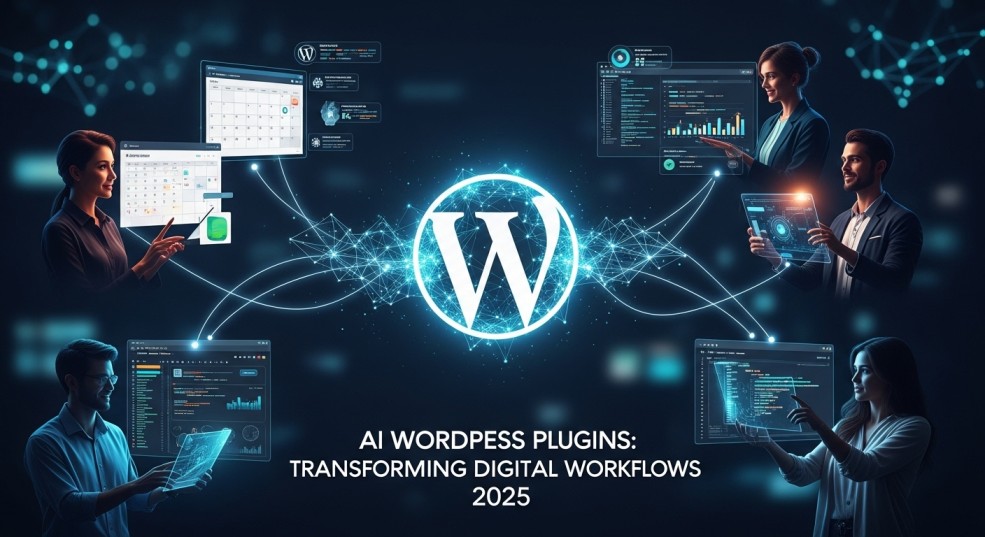
As WordPress continues to power over 40% of all websites worldwide, efficiency, automation, and content quality are becoming top priorities for site owners and developers alike. Artificial Intelligence (AI) is now at the heart of this transformation — reshaping how content is created, optimized, and managed.
In 2025, AI is no longer just a buzzword for WordPress users; it’s a practical tool embedded across the entire workflow — from content writing to SEO optimization and user engagement. Let’s explore how AI is revolutionizing WordPress workflows and what it means for developers, marketers, and content creators.
1. Smarter Content Creation and Editing
AI writing assistants and plugins are redefining how WordPress users create content. Tools like Jetpack AI Assistant, ChatGPT integrations, and AI Engine now allow you to:
Generate blog posts, headlines, and meta descriptions instantly.
Rewrite or summarize existing content for clarity and tone.
Automatically optimize readability and keyword density.
With these tools, content teams can focus more on creativity while AI handles repetitive writing and formatting tasks.
2. Automated SEO Optimization
Search engine optimization remains critical to WordPress success — and AI is simplifying it dramatically. Plugins like Rank Math AI and Yoast SEO with AI enhancements analyze your content in real-time to
Suggest targeted keywords and phrases.
Improve title tags and meta descriptions automatically.
Predict how well a post might rank before publishing.
These tools save hours of manual SEO work and make optimization a seamless part of the editing process.
3. AI-Powered Image and Media Management
Managing large media libraries can be overwhelming. AI now plays a huge role in helping WordPress users organize and enhance visual content:
Image recognition and tagging automatically categorize uploaded images.
Smart image compression improves site performance without losing quality.
AI-generated visuals (via DALL·E, Midjourney, or built-in plugins) help fill design gaps quickly.
This allows website owners to maintain beautiful, fast-loading pages without needing extensive design experience.
4. Personalized User Experiences
AI integrations enable WordPress websites to deliver personalized content to each visitor. With tools like If-So, Logic Hop, and AI-driven chatbots, site owners can:
Show custom messages or offers based on user behavior.
Recommend posts, products, or services dynamically.
Engage visitors through intelligent, conversational chatbots.
Personalization boosts engagement, conversion rates, and customer satisfaction — all powered by machine learning insights.
5. Streamlined eCommerce Workflows
For WooCommerce users, AI has become a game-changer. From predictive analytics to smart inventory management, AI-driven extensions can now:
Forecast demand and suggest pricing strategies.
Automate product descriptions and categorization.
Detect fraudulent activity and recommend upsells in real time.
This helps online store owners make data-driven decisions and improve profitability with minimal manual effort.
6. Faster Website Development with AI
Developers are leveraging AI-powered tools to speed up WordPress site creation. Plugins and platforms now assist with:
Code generation for custom functions, blocks, or CSS layouts.
Automatic bug detection and performance analysis.
Theme and page builder AI suggestions for faster design.
With AI integration in tools like Elementor and Divi, building professional-grade websites takes a fraction of the time it once did.
7. Enhanced Security and Maintenance
Security is another area where AI shines. Modern plugins like Wordfence Intelligence and AI Security Suite use machine learning to:
Detect unusual login patterns or malicious behavior.
Block threats proactively before they affect your site.
Automate backup and restoration tasks intelligently.
This ensures your WordPress site remains secure and stable — with minimal human monitoring.
8. AI-Driven Analytics and Insights
AI analytics plugins go beyond basic tracking to provide actionable insights. They can now:
Predict visitor trends and engagement behavior.
Suggest content updates for underperforming pages.
Automatically generate performance reports with recommendations.
With tools like ExactMetrics AI and Google Analytics 4 integrations, website owners gain a clear understanding of what’s working and what needs improvement.
Conclusion
AI is no longer a futuristic concept — it’s a fundamental part of how WordPress websites are built, managed, and optimized in 2025. Whether you’re a blogger, marketer, or developer, integrating AI into your workflow means saving time, improving content quality, and making smarter decisions backed by data.